Darnell Houston
Just MercyDarnell Houston is the young witness whose account directly undermined a key part of the prosecution’s case against Walter McMillian. Houston said he had worked beside Bill Hooks throughout the morning Ronda Morrison was murdered, contradicting Hooks’s claim that he had driven past the cleaners where the killing occurred. Houston gave Bryan Stevenson an affidavit supporting that account, but instead of being treated simply as a source of new evidence, he was arrested and charged with perjury. The charges were later dropped; Houston, however, remained shaken and did not want to pursue a civil suit. His brief but consequential role links a specific alibi to the wider pressure surrounding McMillian’s conviction.
Identity and Introduction
Houston was a young Black man in his twenties who lived in rural Monroe County, Alabama, on farmland his family had worked since the time of slavery. When he first contacted Stevenson, his voice shook with nerves, but he was determined to explain that he could prove McMillian was innocent. He did not want to discuss the matter by telephone, so Stevenson drove to meet him at home.
The account of their meeting emphasizes both Houston’s hesitation and his resolve. His chemically styled Jheri curl, a look that had become popular among Black men in Monroeville, bounced cheerfully against his worried demeanor. Once seated, he quickly turned to the reason for the visit. Stevenson understood that Houston had been debating for some time whether to come forward, making the encounter not a casual offer of information but a decision to enter a case that had already placed a man on death row.
The NAPA Store Alibi
Houston’s evidence concerned the morning of Morrison’s murder and the whereabouts of Hooks, whose testimony placed Walter McMillian’s truck near the cleaners. Houston said that he and Hooks had both worked at the NAPA auto parts store the previous November, on the Saturday Morrison was killed. He remembered the day because ambulances and police raced up the street, an unusual commotion that continued for about thirty minutes.
Houston placed himself and Hooks at the store from about eight in the morning until it closed after lunch. He recalled that the sirens began at roughly eleven, while Hooks was working on a car beside him. The store had only one way out, Houston explained, and Hooks had not left during the morning. That detail made the account specific and testable: if Hooks had remained at the shop, he could not have driven past the cleaners at the time he claimed. Houston’s testimony therefore did more than express doubt about Hooks’s reliability; it supplied a firsthand account that contradicted the prosecution witness on a central point.
New Evidence and the Perjury Charge
By the time Houston approached Stevenson, the opportunity to introduce new facts at trial had largely passed. McMillian’s original lawyers had filed a motion for a new trial, but Judge Key had denied it. Houston said he had already told those lawyers what he knew, and that the information had been raised without being taken seriously. Stevenson had planned to pursue a direct appeal, where new evidence would not be considered, but Houston’s account created a reason to try again before the appeal proceeded.
Stevenson obtained Houston’s affidavit stating that Hooks’s testimony was a lie and moved for reconsideration of the denial of a new trial. A new trial was rarely granted, but new evidence capable of changing the outcome or undermining the trial’s reliability could warrant a hearing. Stevenson also explored whether the newly elected district attorney, Tom Chapman, might acknowledge that the conviction was unreliable and support a new trial. Houston’s account had thus become part of a concrete legal effort to challenge the conviction, rather than an unrecorded objection to what had happened in court.
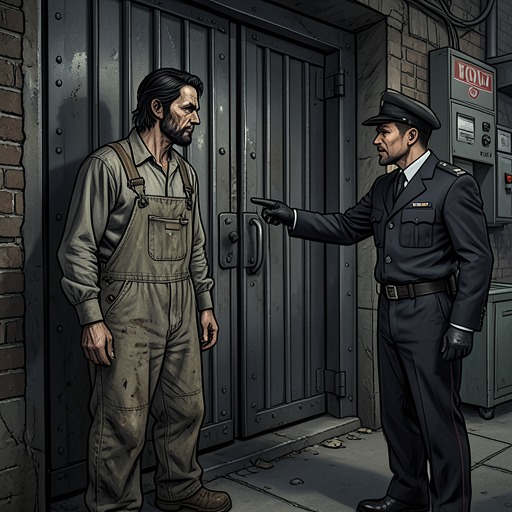
Then Houston called Stevenson’s office with news that he had been arrested that morning, taken to jail, and released on bond. He had been charged with perjury. The arrest followed his effort to provide information contradicting Hooks, and Stevenson treated the charge as an attempt to intimidate him. Houston’s vulnerability was sharpened by the circumstances: he was a young witness from a rural community, confronting officials over testimony that helped sustain a capital conviction.
Fear, Resolution, and Narrative Significance
After meeting with Chapman, Stevenson returned to Houston’s home. Houston was relieved to hear that the charges would be dropped, but the experience had left him frightened. Stevenson explained that the State’s conduct was illegal and that Houston had done nothing wrong. He also raised the possibility of a civil action, while acknowledging that a lawsuit could expose Houston to further harassment. Houston had no interest in pursuing one. His priority had been to tell the truth; now, he feared going to jail and admitted that officials had scared him.
Houston’s role exposes the difference between possessing exculpatory information and being able to present it safely. His account challenged the prosecution’s version of Hooks’s movements, created a basis for renewed proceedings, and was followed by a criminal charge against the witness who supplied it. The charge was dropped, but the resolution did not erase the fear or restore the security of speaking freely.
The book places this episode within a legal and racial landscape in which formal rules did not guarantee equal access to justice. In Alabama in 1987, all forty elected district attorneys were white, despite the state having sixteen majority-Black counties; discretionary peremptory strikes also continued to make it difficult for Black citizens to serve on juries. Those facts do not establish why Houston was charged, but they illuminate the institutional setting in which his challenge to the prosecution unfolded. His testimony is a small, precise counter-account: a coworker, a single-exit store, a car being repaired, and a morning when the sirens began. The specificity that made his account consequential also made the response to him consequential, turning an alibi witness into another person pressured by the machinery surrounding McMillian’s conviction.